Events explained
What to expect at a Texas rodeo
A first-timer's guide to a rodeo night: the events in running order, what each one asks of the rider, and what the ropes, bulls and barrels mean.
Book a rodeo night ↗Quick answer
A rodeo is a competitive sport that grew out of cattle ranching in Spain and Mexico. A night at one splits into timed events, such as roping and barrel racing, and rough stock events, such as bull riding. At Tejas Rodeo in Bulverde the main performance runs from a grand entry through bull riding, roping, children's events and barrel racing, and ends with a second round of bull riding. You do not need to know the rules, because the arena makes each event easy to read.
What a rodeo is
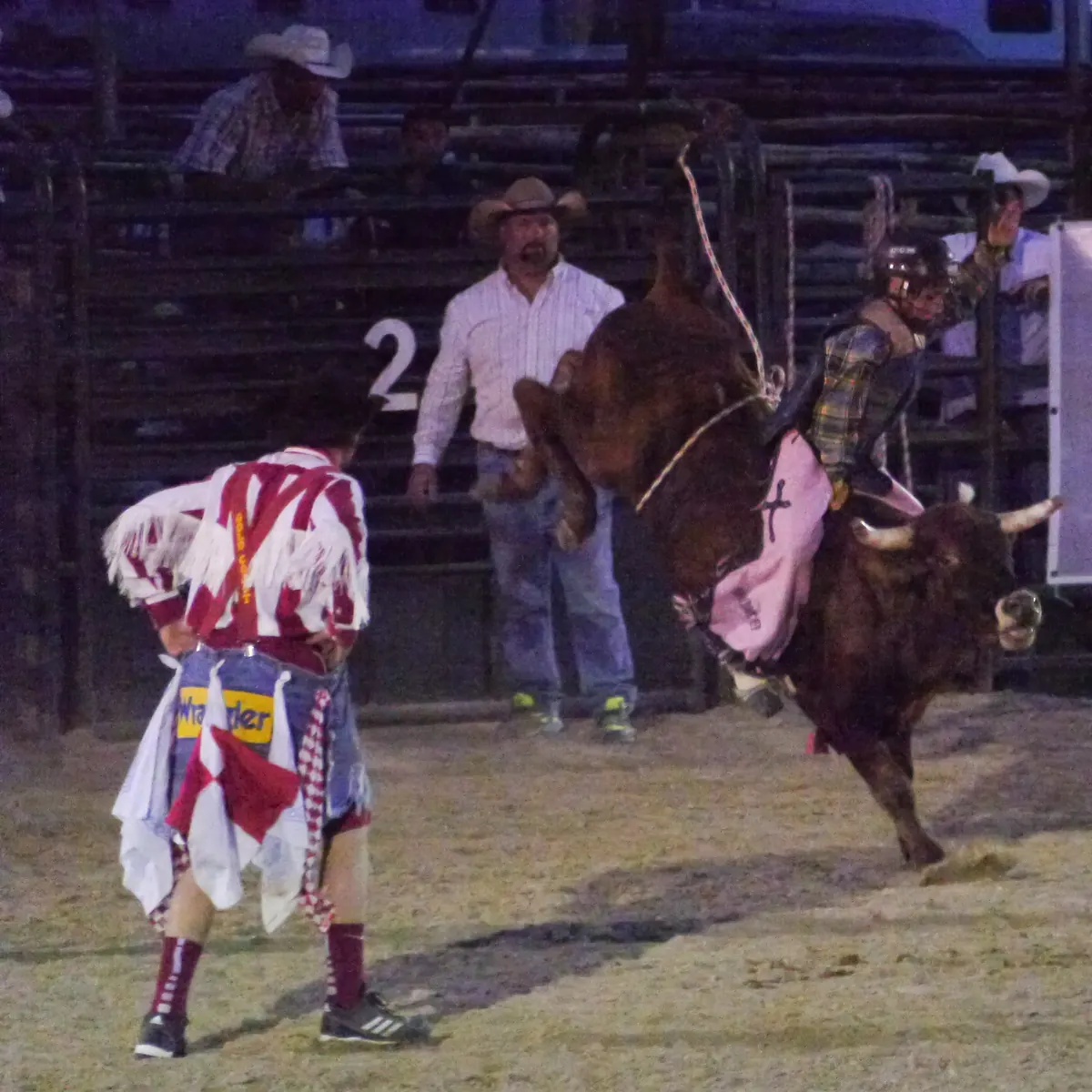
Rodeo is a competitive equestrian sport that arose out of the working practices of cattle herding in Spain and Mexico, and it was originally based on the skills of the working vaqueros and, later, cowboys. The word is taken directly from Spanish, where it roughly translates as round up. Today it is a sporting event that involves horses and other livestock, designed to test the skill and speed of cowboys and cowgirls. For a visitor, the useful idea is simple: each competitor is up against a clock or a bucking animal, and the crowd can see the result at once.
Timed events and rough stock
Professional rodeos generally comprise tie-down roping, team roping, steer wrestling, saddle bronc riding, bareback bronc riding, bull riding, breakaway roping and barrel racing. The events fall into two basic categories: timed events and rough stock events. In a timed event the winner is the fastest competitor, and penalties add seconds. In a rough stock event the rider has to stay on a bucking animal and is scored. Some, like the one in Bulverde, add children's events. The running order at Tejas mixes the two kinds, so the pace changes from one event to the next. It opens with the grand entry and a first round of bull riding, and barrel racing comes just before the closing round of bull riding.
Grand entry and the people in the arena
A typical rodeo begins with a grand entry, in which mounted riders, many carrying flags, enter the arena at a gallop, circle once and stop in the centre. It introduces some of the competitors and sponsors and is capped by the presentation of the American flag. Then the work starts. Beyond the competitors, a rodeo employs judges, announcers and bullfighters, the performers who protect a fallen rider during bull riding. Pickup riders on horseback help riders safely off bucking horses. The ticket describes the opening at this venue as including a longhorn cattle entrance, a drill team and the flags. The longhorn is a breed whose ancestors came to the Americas with Spanish conquistadors, and it is considered part of the cultural heritage of Texas.
Bull riding
American bull riding has been called the most dangerous eight seconds in sports. To receive a score, the rider must stay on top of the bull for eight seconds with one hand gripped on a bull rope. Touching the bull or themselves with the free hand, or failing to reach eight seconds, results in a no-score ride. Judges score both rider and bull, and a perfect score is generally 100 points. Because bulls are unpredictable and may attack a fallen rider, bullfighters work in the arena to distract the bull. Bull riding traditions also exist in many countries outside the United States, with varying rules and histories. At Tejas, bull riding opens the performance and returns for a second round at the end.
Read next: Saturday night rodeo near San Antonio
Team roping
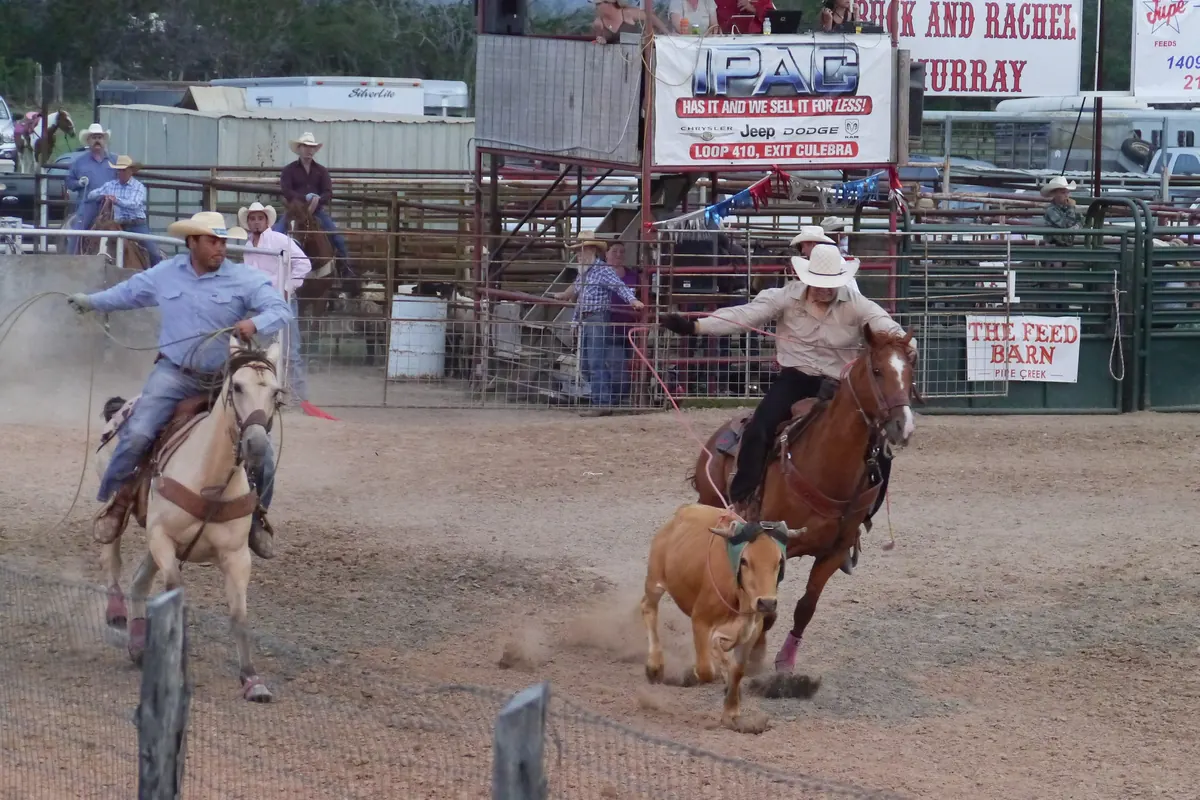
Team roping, also known as heading and heeling, features a steer and two mounted riders. The first roper is the header, who ropes the front of the steer, usually around the horns. The second is the heeler, who ropes the steer by its hind feet after the header has turned it. A five-second penalty is added to the final time if only one leg is caught. Mexican vaqueros developed the technique on working ranches, where a full-grown animal was too large for a single rider. The steer wears protective horn wraps against rope burns. It is the only rodeo event in which men and women may compete together and equally in professionally sanctioned competition.
Breakaway and tie-down roping
Calf roping, also called tie-down roping, asks the rider to catch a calf with a loop of rope, dismount, run to the calf and tie three legs together in as short a time as possible. It is the oldest of rodeo's timed events. Breakaway roping is a form of calf roping in which a very short lariat is tied lightly to the saddle horn with string and a flag. When the calf is roped about the neck, the horse stops, the flagged rope breaks free, and the calf runs on without being thrown or tied. In most of the United States, breakaway is primarily for women of all ages and boys under twelve.
Barrel racing
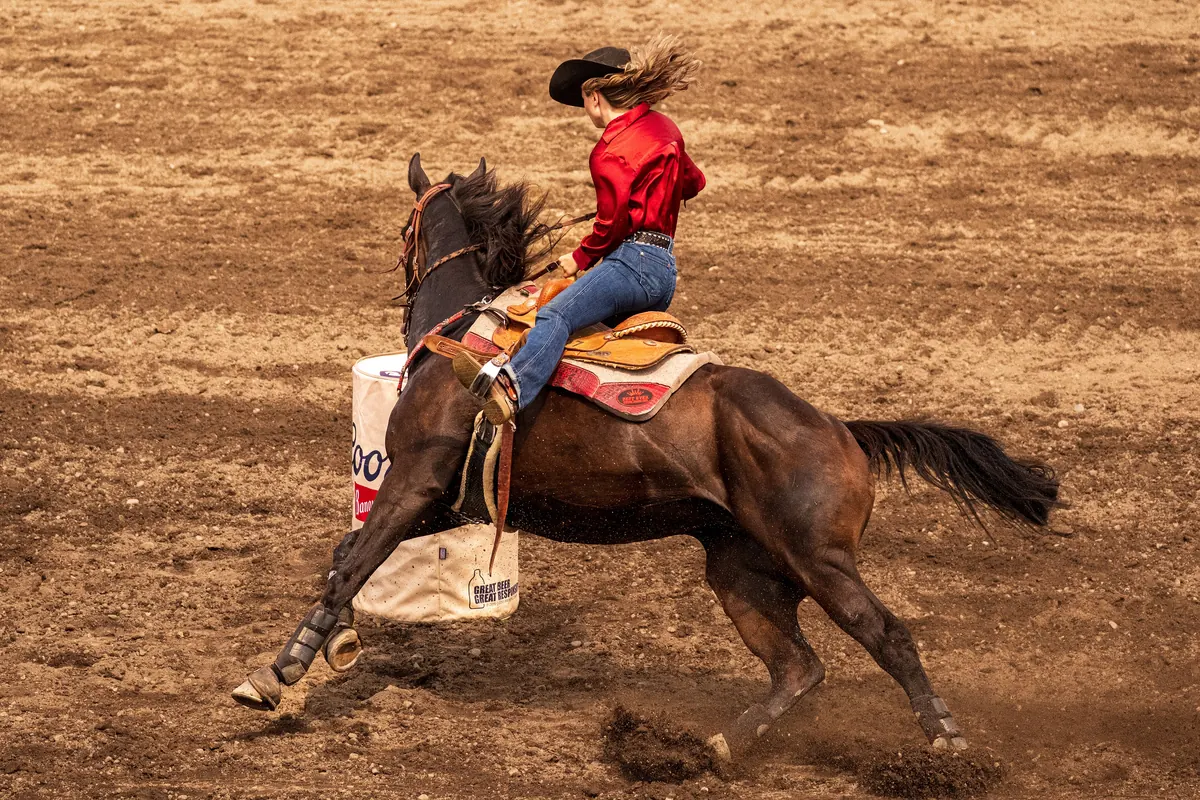
Barrel racing is a timed speed and agility event in which a horse and rider gallop around a cloverleaf pattern of three barrels, making agile turns without knocking the barrels over. The fastest time wins, and knocking a barrel over adds a time penalty of five seconds. In collegiate and professional ranks it is usually a women's event. The Women's Professional Rodeo Association was founded by a group of women from Texas looking for a place in the wider sport. Barrel racing is part of most rodeos. At Tejas it comes late in the performance. Success depends on the horse's condition, the rider's horsemanship and the footing of the arena floor.
The children's events
Some rodeos include novelty events such as mutton busting for small children. In mutton busting, a sheep is held still and a child is placed on top; once released, the sheep usually runs, and the majority of children fall off in less than eight seconds. Helmets are usually required. Age, height and weight limits generally protect the sheep, and spurs are banned. Tejas lists mutton bustin' and a calf scramble in its running order, and the ticket says children can join in the calf scramble. For Tejas, mutton bustin' riders are aged four to seven and under 55 pounds, and the entry is made online in advance and separately from admission.
Read next: Rodeo with kids: mutton bustin'
What the running order tells you
The order Tejas gives for its Saturday performance is a grand entry, bull riding, a drill team on horseback, team roping, mutton bustin', a calf scramble, breakaway roping, tie-down roping, barrel racing and a second round of bull riding. After the main show, overflow contestants, called the slack, compete while the live band and dance begin. The venue also mentions occasional specialty acts such as saddle bronc riding. Some professional rodeos are staged indoors in large, climate-controlled arenas and others outdoors; Tejas is covered but open-air. Use the list as a guide rather than a promise, because the programme can differ from one Saturday to the next. Tejas runs mutton bustin' in two sessions, one in the pre-show and one during the rodeo performance.
Who this isn't for
Rodeo has provoked opposition from animal rights and some animal welfare advocates, who argue that various competitions constitute animal cruelty. The rodeo industry says it has made progress, with specific requirements for veterinary care and other regulations that protect rodeo animals, and some local and state governments have banned or restricted rodeos, certain events or types of equipment. Rodeo is banned in the United Kingdom and the Netherlands. If watching animals used in competition troubles you, skip this evening. Steer roping, which the reference article describes as rarely seen at American rodeos because of injury and cruelty concerns, is not on the Tejas running order. The Tejas list names bull riding, team roping, breakaway roping, tie-down roping and barrel racing among the main events.
What to watch for
Four moments reward a first-time watcher.
- The eight-second mark in bull riding, and the bullfighter's position.
- The header's loop and the heeler's loop in team roping.
- The tight turn at the first barrel in barrel racing.
- The flag on the rope in breakaway roping, when it breaks free.
Frequently asked questions
Do I need to know the rules?
No. Each event is a contest against a clock or a bucking animal, and the result is visible in the arena as it happens.
What is the difference between timed and rough stock events?
Timed events, such as roping and barrel racing, are won on the fastest time. Rough stock events, such as bull riding, score the rider who stays on a bucking animal.
How long must a bull rider stay on?
Eight seconds, with one hand on the bull rope. Touching the bull or themselves with the free hand gives a no-score ride.
Is rodeo the state sport of Texas?
Yes. Rodeo is a state sport of Texas, along with Montana, Wyoming and South Dakota.
Does this venue run steer wrestling?
It is not on the running order the venue publishes. Check the order on your night, because acts can be added.
Sources